How AI Is Killing Your Online Business and You Don't Even Know

TL;DR AI is not hurting your business because you use it. It hurts when you let it replace the experience, evidence, and original thinking that give people and search engines a reason to trust you.
Let me explain what happens when you ask AI to write your content without giving it anything original to work with.
Depending on the tool and how you use it, AI either draws from patterns learned from existing online content or searches the web and summarizes what is already there. That often includes the same pages your competitors are already ranking with. It then gives you a cleaner version of information that already exists.
And that is the problem. You are trying to outrank your competitors using recycled versions of the ideas that helped them rank in the first place. You have added no firsthand experience, no customer insight, no original data, and no reason for Google or a potential client to choose your page over theirs.
Google does not need to know with perfect certainty that AI wrote your article. It only needs to recognize that the article adds nothing new. Google rewards original, useful content. It does not reward copies of existing information just because the words have been rearranged.
This is exactly what is killing your online business. Maybe you are paying an agency that relies on AI for every article. Maybe you are doing it yourself because some dude on YouTube recommended AI, without explaining how to use it properly because he does not understand it himself.
AI is not the problem. Publishing content without your own expertise, experience, evidence, or point of view is the problem. Without those things, AI can only make you sound like everybody else.
AI Can Only Work With What Already Exists
AI starts with what already exists. It can use patterns learned from public content, search available sources, and reorganize the information you give it. What it cannot bring to the article is a life it never lived, work it never performed, or lessons it never had to learn.
I discovered this while building the Darko Unity blog.
When I first started writing for my business, I wanted to automate everything. The idea sounded perfect: build a system that could publish articles while I slept. As an engineer, I did not stop at the idea. I started building the ecosystem and integrated Claude into my workflow.
Technically, the system worked. The problem was that the articles were bad.
They had correct sentences and clean formatting, but no depth. They were generic versions of information that already existed. There was nothing in them that could only have come from me.
I started sharing the content on Reddit, and people called it AI slop. Some angry commenters posted results from AI detection tools claiming the articles were completely AI-generated. Those detectors are not reliable proof, but that did not change the important part: the readers were right. The content felt artificial because it had nothing real behind it.
Once I noticed the problem in my own work, I started seeing it everywhere. On LinkedIn, creators and competitors were publishing the same polished, empty content. Some had much larger YouTube channels and far more recognizable names than mine, yet their posts received barely any views, comments, or meaningful interaction.
I started losing respect for people whose work I had previously followed. Then I realized that my audience was probably looking at my content in exactly the same way.
That was my wake-up call.
I stopped asking AI to create my ideas and started writing from my own experience. One example is my article about Unity DOTS. Most articles explained DOTS by repeating information from Unity documentation or Wikipedia. I explained how the CPU works, why Unity created DOTS, and why understanding the stack and heap is essential before trying to understand data-oriented programming.
That different approach helped the article rank for "Unity DOTS," despite competing with websites that had existed far longer than mine. I have also seen it appear in Google's AI Overview. It worked because I gave readers context that was missing from the existing tutorials.
I still use AI, but I use it as a copy editor. English is not my first language, and grammar mistakes can make an article feel less credible to a native speaker. AI helps me clean up those mistakes.
The experience, argument, examples, and conclusions still have to come from me. AI improves how I communicate them. It does not decide what I have to say.
AI Cannot Fake Experience, and People Will Find Out
AI did not invent fake expertise. It just made it cheaper and easier to scale.
This problem existed long before ChatGPT. You would find someone through their YouTube channel, but there was no professional background before the channel. Their only proof of expertise was the content in which they presented themselves as an expert.
It is the same model used by gurus who became rich by teaching other people how to become rich. You can find it in almost every niche, just packaged differently. Many of these creators are only one lesson ahead of their audience. They study a topic before recording, explain it confidently on camera, and appear credible to someone encountering the subject for the first time.
I know because this is how I learned programming.
I spent years learning Unity from tutorial creators. I could follow their instructions and make things work, but my knowledge was fragmented and full of gaps in the fundamentals. I could use a data structure without explaining why I chose it. I could copy a solution without understanding how it worked. The problem only became obvious when experienced engineers started asking me questions that a tutorial had never prepared me to answer.
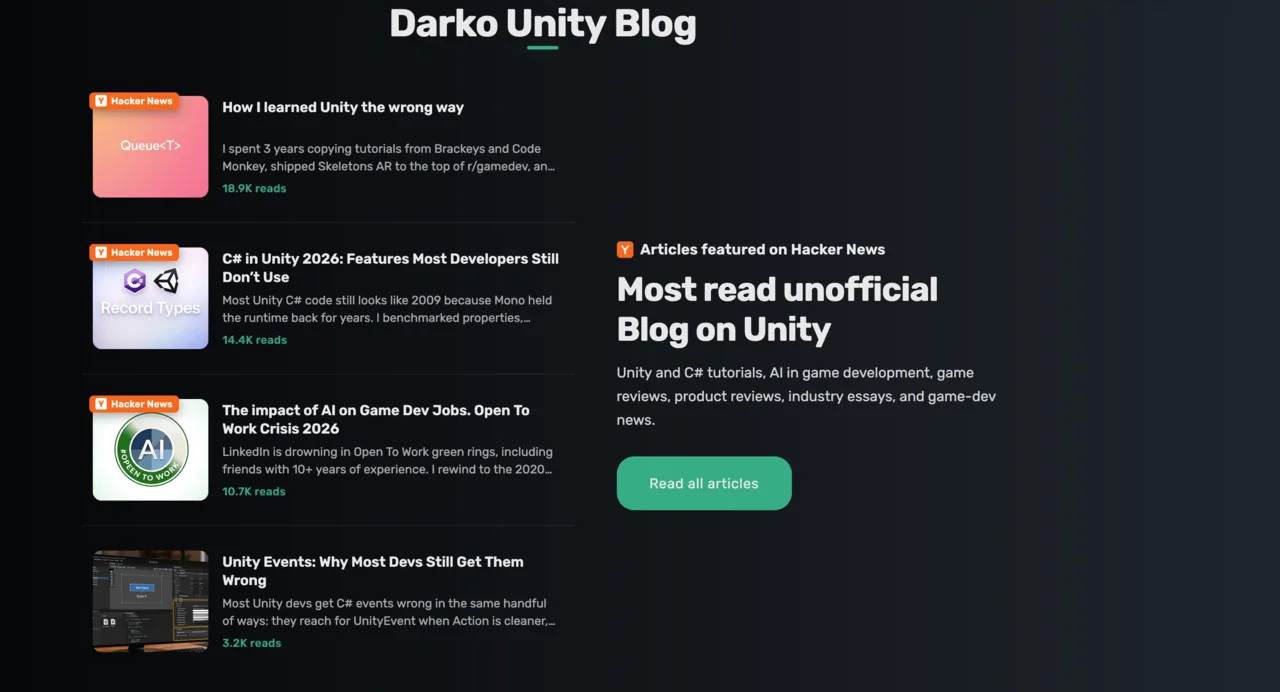
I wrote the full story in How I Learned Unity the Wrong Way. That article reached the top three on Hacker News because many developers recognized the same problem in their own careers. I had to go back and relearn the fundamentals. I was lucky to recognize the problem near the beginning of my career. Some people never do.
AI is making this problem more common. Coding Jesus showed a painful example in a conversation with a computer science graduate who had relied heavily on AI. The student could produce answers, but the depth underneath them was missing. A degree, a finished project, or a confident explanation can create the appearance of knowledge. A few follow-up questions reveal whether the understanding is real.
The MEDVi story shows what this looks like at a much larger and more dangerous scale. The weight-loss telehealth company was promoted as a two-person AI business projected to generate $1.8 billion in revenue. It later faced scrutiny over reports of AI-generated doctor profiles, fabricated testimonials, and altered customer images. Forrester's analysis of the MEDVi story is a useful warning about accepting an impressive AI success story before checking what is behind it.
This does not mean every creator, agency, or AI company is lying. It means AI can scale the appearance of credibility much faster than it can create real credibility. Eventually, customers, colleagues, journalists, or the work itself expose the difference.
Business owners need to understand this when hiring an agency. You do not need to become an SEO specialist before paying someone for SEO, but you should learn enough to understand what you are buying and ask useful questions. Otherwise, you have no way to tell an experienced practitioner from someone who watched three videos and prepared a convincing sales call.
This is exactly how businesses end up paying every month for a website and marketing without getting results. They buy a service without knowing what a competent version of that service should include.
If an SEO agency promises to make you rank higher without asking about your customers, your business, your competitors, and how you make money, that promise means nothing. They are selling the same generic answer to every client.
Real experience shows up in the questions someone asks before they recommend a solution.
AI Is Not the Ranking Problem. Being Unoriginal Is.
People spend too much time asking whether Google can detect AI content. That is the wrong question.
Google's own guidance does not say that using AI automatically hurts your rankings. It says generative AI can be useful for research and structure, but generating pages without adding value may violate its policy on scaled content abuse.
The problem is not which tool produced the sentences. The problem is whether the article gives readers something they could not get from the pages that already exist.
I saw the difference as soon as I stopped automating my articles and started writing them by hand.
One of the first was The Impact of AI on Game Dev Jobs. I submitted it to Hacker News, and it received close to 10,000 reads in about a day.
That article was not another generic prediction about AI taking programming jobs. It was my account of the changes I had watched across the technology industry during the previous four or five years.
I watched the mass layoffs at Twitter, now X, signal how quickly large technology companies were prepared to reduce their teams. When ChatGPT 3.5 and GitHub Copilot arrived, we used them relentlessly at Auki. The code they produced was not close to the quality we could write, but that was not the important part. We could see the direction. These tools were going to keep improving, and the amount of work one engineer could produce was going to increase with them.
AI could summarize the layoffs, product announcements, and public opinions. It could not explain what those changes looked like from inside a team that had started using the tools in its daily work. That was the part readers responded to.
Hacker News traffic alone does not prove that Google prefers hand-written content. It proves that real people found the story worth reading and sharing. The search results came afterward.
Over the following three and a half months, the Darko Unity blog reached 302,000 Google Search impressions and 1,260 clicks. Three of my hand-written articles reached the top of Hacker News. I documented the numbers and the Search Console evidence in How I Grew a New Blog to 302K Impressions by Writing Every Post by Hand.
That does not prove that every hand-written article will rank or that every AI-assisted article will fail. It proves something more useful: original experience gave both readers and search engines a reason to choose my content over another summary of the same information.
AI can help me correct the grammar, organize the argument, and make the article easier to read. But it cannot be the source of the value. If the ideas, examples, and experience are unoriginal, better sentences will not save them.
Use AI as an Editor, Not an Author
The answer is not to stop using AI. The answer is to stop asking it to replace the person who knows the subject.
At Tomicz, an article does not begin when somebody opens a blank document. It begins before we agree to work with a client.
We audit the business. We learn who its customers are, which products it sells, who its competitors are, and how its industry works. We document that knowledge inside the project itself. The documentation is updated as the business changes, so it becomes a living source of context rather than a brief that gets forgotten after the first meeting.
That is what being an AI-native marketing agency means to us. The technology working on the project has access to the context of the business, but it does not invent the client's experience.
I write the first draft, or one of our copywriters does. Every copywriter follows the same writing guidelines so the voice and quality stay consistent across the business. The argument, examples, judgment, and final responsibility belong to a person.
AI comes afterward. It copyedits the writing, checks claims against the supplied business documentation and reliable sources, finds relevant internal and external links, and helps prepare and place images. A human reviews the result and remains responsible for what gets published.
We also review every article against Google's people-first and E-E-A-T guidance. That is not a promise that every article will rank. E-E-A-T is not a single ranking factor or a checklist that guarantees a position. It is a useful way to ask whether the content demonstrates real experience, credible expertise, clear authorship, reliable sourcing, and a reason for the reader to trust it.
Doing this properly takes time. A serious article can take hours or days. AI makes the mechanical parts faster, but it does not remove the work that gives the article value.
If your agency publishes content without interviewing you, learning your business, or asking where your knowledge comes from, it does not have enough information to represent you. It is probably producing a generic version of whatever already ranks and sending you the invoice. I wrote a separate guide on how to tell whether your digital agency is scamming you.
AI is not killing your online business because you used it. It is killing your online business when you let it replace the experience, judgment, and originality that gave customers a reason to trust you in the first place.
Use AI to make your voice clearer. Do not let it become your voice.